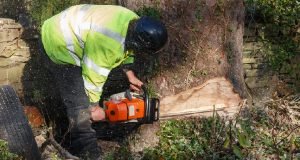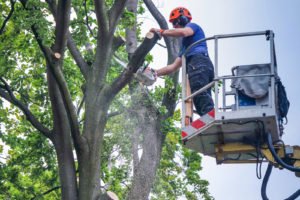
Some of the oldest tree canopy in New York City are decades old oaks, maples, and London planes planted on streets in the Bronx neighborhoods of Riverdale, Pelham Bay, and Throggs Neck. That maturity is part of what makes the borough so green, but it also means a lot of trees are reaching the point in their life cycle where structural failure becomes a real risk.
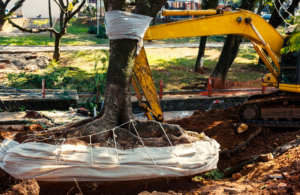
Coupled with the Bronx’s dense network of residential blocks, crumbling sidewalks and more frequent catastrophic storms, an unhealthy tree isn’t just a blight a liability sits just a few feet from your home, your vehicle or a shared property line. Most tree failures don’t happen without warning. The seven signs arborists look for that indicate a tree is about to fall on its own.
1. A Trunk That’s Leaning More Than It Used To
Some trees are permanently leaning and are quite stable. The danger sign is a lean that is new or has become more obvious in the last year or two. If suddenly the tree leans, particularly following a storm or heavy rain, it indicates that the root system has partially failed on one side and is no longer able to anchor the tree in place. If soil can be observed lifting or cracking on the opposite side of the lean, it’s a clear sign that the roots are coming undone.
2. Large Dead Branches in the Canopy
It is normal to have a few dead twigs. Large dead limbs especially ones thicker than a few inches in diameter are not. One of the most frequent causes of falling limbs is deadwood in the upper canopy and this can fall on a calm day as well as storm day. When a large section of the tree crown is not filled with leaves and another area is full of leaves, it’s likely that the dead branch is not the only issue; it may indicate root damage, disease, or trunk decay.
3. Cracks, Splits, or Seams in the Trunk
Cracks that extend from the base of the trunk to the top are an indication of loss of structural integrity, particularly those that extend through the wood and not just the bark. This is particularly serious if the crack is between two large limbs (a “included bark” seam), because it’s where a co-dominant trunk often separates completely when subjected to storm or heavy snow. Cracks that have been opened up or extended, or have begun to ooze sap or sawdust-like matter (which is evidence of insect activity) require a professional inspection prior to the next big blow.
4. Mushrooms or Fungal Growth on the Trunk or at the Base
The most apparent visible symptoms of internal decay are mushrooms, conks or shelf-like fungal growths (sometimes “bracket fungi”) growing directly out of the bark or from the base of the trunk. Fungi such as these depend on dead or decaying wood, and when they do appear, it typically signals that rot is already present within the trunk or root system, and likely for some time prior to any sign of problems on the exterior. A tree can look perfectly healthy in its canopy while being structurally hollow underneath, which makes fungal growth at the base one of the most important signs not to ignore.
5. A Trunk That Sounds Hollow When Tapped
Not all internal decay will be visible as fungus. A quick field test arborists use to determine if there are cavities inside the tree is to tap the trunk with a mallet or the back of an axe, and listen for the hollow drum-like sound that would be expected if the tree has a cavity, versus the solid thud that would occur if the wood was healthy. While hollow trunks may be able to support a tree for several years in calm weather, they significantly decrease the amount of wind load that a tree can withstand – which is the type of failure that displays during a Nor’easter or a summer microburst.
6. Exposed, Cut, or Damaged Roots
Root damage is more likely to be man-made than natural in dense Bronx neighborhoods. An entire section of a tree’s root system can be severed or compacted with little or no knowledge of the amount of tree support that was lost, through sidewalk or driveway construction, utility trenching, or repeated heavy foot traffic. Two indicators to consider are root exposure at the base from building work and heaving or cracking soil near the base, and thinning canopy that begins to occur within one or two seasons of digging near the plant. Damage to the root system can be especially serious as the tree may appear entirely normal but may have reduced its own holding power by 50%.
7. Thinning Canopy or Premature Leaf Drop
When leaves are much less dense than in past years, leaves are browning and dropping early in the season, and new growth is stunted and small, the tree is in serious stress. It can be the result of root damage, disease, compaction, or simply old age but in most cases, a reduced canopy is the tree’s “cry for help” that it is no longer able to sustain itself – and often this is a warning sign before branch dieback and eventual structural failure.
What to Do If You Spot These Signs
While the appearance of one of these signs does not necessarily indicate that a tree should be taken down immediately, it does indicate that the time for waiting and seeing has passed, and a professional risk assessment is needed instead. A certified arborist (Tree Doctor) will be able to determine the severity of decay or damage and whether the tree may be saved through pruning and treatment, should be cabled and braced to minimize risk, or if decay or damage is too extensive, removal is the better option.
Also keep in mind that in the Bronx like the rest of NYC street trees are property of the city. If the tree displaying symptomology is not located on your own property, but is in the sidewalk strip in front of your house, you must obtain permission from the NYC Parks Department, which can be done in person, prior to removal, even if the tree is clearly dangerous. A good local tree company will understand how to identify a tree as dangerous on the street and how to make sure he or she gets the ball moving with the city if there is a real danger.
Don’t Wait for a Storm to Find Out
Tree failures rarely occur without giving some prior indication – it’s simply that often they are not noticed if not searched for. If you have a lean that has worsened, a deadwood you’ve been neglecting, or mushrooms growing at the base of a tree that is close to your driveway, be sure to take a second look before another big storm sweeps through the Bronx.
Tree Service Bronx offers on-site risk assessment in all Bronx neighborhoods – from Riverdale to Co-op City – and manages the removal process as well as any necessary NYC Parks Department coordination on trees located in public areas and along the street, so you know if a tree is a danger and how to get a clear plan if it’s time for removal.